Why us
What's actually wrong with most Bangkok day tours.
We could have written a page about passion and unforgettable memories. Instead, here is how this industry really works, and the three things we decided not to do.
1. The shopping stop is not a stop. It's the business model.
You've booked a ten-hour tour for 1,200 baht. Work backwards: the coach, the fuel, the tolls, the driver, the guide and the entrance fees cost more than that before anyone makes a single baht of profit. So where does the money come from?
It comes from the gem shop. The silk factory. The "cultural centre" that turns out to be a showroom. These places pay operators a commission on your purchases, and in many cases a flat fee for every coach that pulls in. That is why the stop is on the itinerary, why it lasts ninety minutes rather than fifteen, and why the guide is oddly insistent that you go in.
How to spot it before you book
Look for the words local handicraft centre, gem gallery, jewellery factory, honey farm or cultural demonstration in an itinerary. Look for a day that costs less than the entrance fees would cost you alone. Look at the one-star reviews — this is what almost all of them are about.
What we do instead: we take no commission from any shop, restaurant or attraction, so there's nothing to gain by parking you in one. If you want to buy something, say so, and your guide will take you where Thai people shop. Otherwise you get those ninety minutes back, which on the Ayutthaya route is roughly one extra temple and a slower lunch.
2. We don't sell elephant rides, and we won't book them for you.
This is the one that costs us the most bookings, so let's be straight about it.
Elephant riding and tiger photo attractions are still the highest-converting products in Thai day tourism. They are on the front page of nearly every Bangkok tour site, including the ones that have been running for twenty-five years. We understand exactly why. We've still decided not to.
An elephant's spine isn't the smooth load-bearing structure a horse has — it has upward-pointing protrusions, and a fixed bench carrying several adults for hours does real damage over time. But the riding is the visible part. The part you don't see happens years earlier, when the animal is broken in young through restraint and deprivation so it will accept a person on its back at all. Tiger cubs handed over for photographs are usually separated from their mothers early and handled by strangers all day.
If you want to see elephants — and you should
Tell us when you message. We don't run an elephant trip ourselves yet, but we'll point you to a sanctuary where you prepare their food, feed them by hand and help bathe them — no riding, no chains, no show. It's a better day out, and it rather makes the point.
3. Nothing gets added at the gate.
The second most common complaint about Thai day tours isn't the shopping — it's the money that appears later. The entrance fee that wasn't mentioned. The "optional" boat that isn't really optional once you're standing at the pier. The national park charging foreigners a different rate than the one you were quoted. The quiet expectation of a tip from two people at the end of a long day.
Our price includes entrance fees for everyone in your group, fuel, tolls, parking, bottled water and your guide for the entire day. You will not be asked for money at any point during your trip.
The one thing we deliberately leave out is lunch — not to save money, but because a set tour lunch is almost always the worst meal of the day. Your guide will take you somewhere good and you order what you want. Expect roughly 150–350 baht a head.
So what do you actually get for the difference?
A day that belongs to you. Your own car, leaving when you want. A guide who is talking to your group and nobody else. Ninety minutes not spent in a gem shop. Entrance fees already handled. A plan you can change at 2pm because someone's tired or because you'd rather stay at the market.
And a company small enough that if something goes wrong, you're messaging the person who can actually fix it.
Fair questions
Why do so many Bangkok tours stop at a gem shop?
Because the shop pays the operator a commission on whatever you buy, and often a flat fee just for bringing the coach. For a cheap tour, that commission is not a bonus — it is the business model. The tour price barely covers the fuel. That's why the stop is never optional and never short.
Is elephant riding actually harmful?
An elephant's spine has upward-pointing bony protrusions rather than the smooth structure a horse has, so carrying a fixed bench and several adults for hours causes lasting damage. The bigger issue is what happens before the riding: elephants used for tourist rides are typically broken in as juveniles through a process of restraint and deprivation. We're not asking you to take our word for it — it's well documented, and worth ten minutes of reading before you book with anyone.
Do you go to Damnoen Saduak floating market?
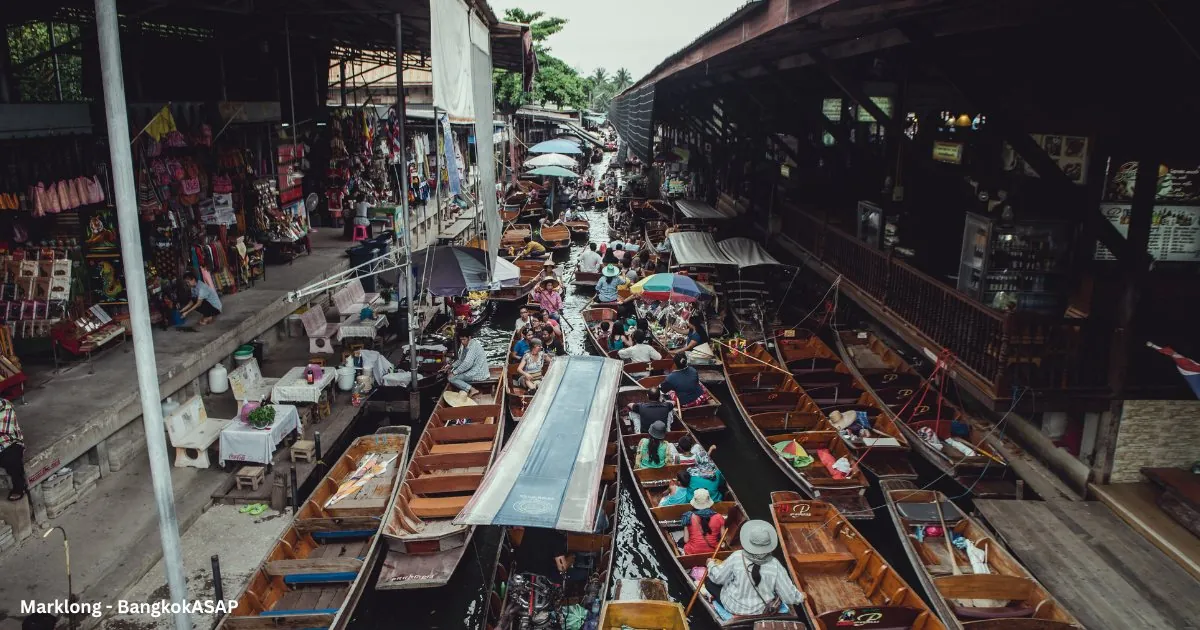
Generally no, and we'd rather explain why than quietly take you there. Damnoen Saduak now runs almost entirely on tour buses: you pay for a boat, you get pushed past souvenir stalls, and the prices are set for tourists. We take you to Amphawa instead, which is where Bangkok families go at the weekend. If you specifically want Damnoen Saduak, we'll take you — but we leave early enough to be there before the coaches.
You're more expensive than the tours on the big booking sites. Why?
Partly because we're private rather than a coach, and partly because our price already contains the things those tours add later — entrance fees, tolls, parking, water. But the honest answer is that we've given up the two revenue streams that make cheap tours possible: shop commission and animal attractions. That has to show up somewhere, and it shows up in the price.
Ready when you are.
Two routes out of Bangkok, run properly. Book online, or message us and we'll tell you honestly which one suits your group.